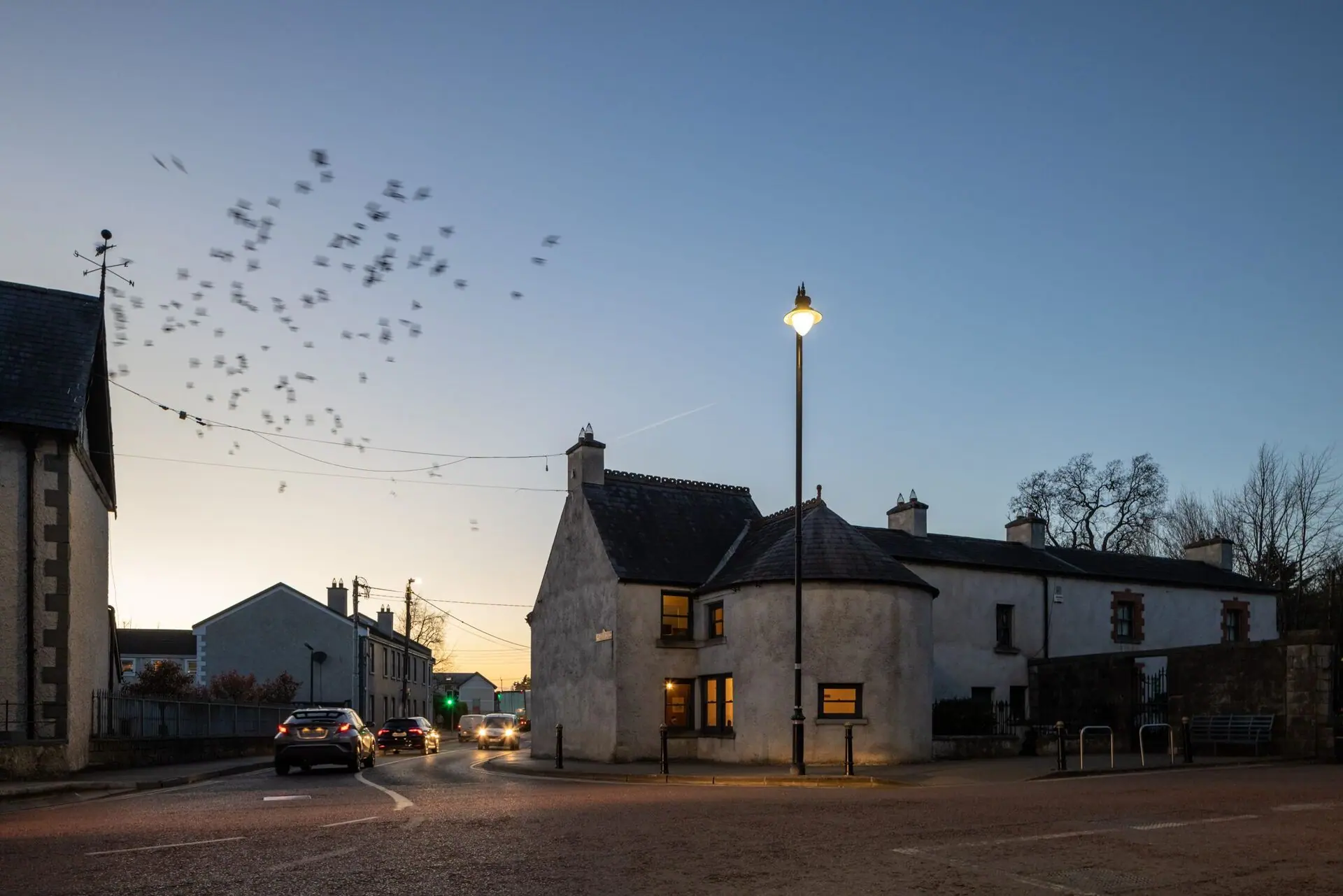
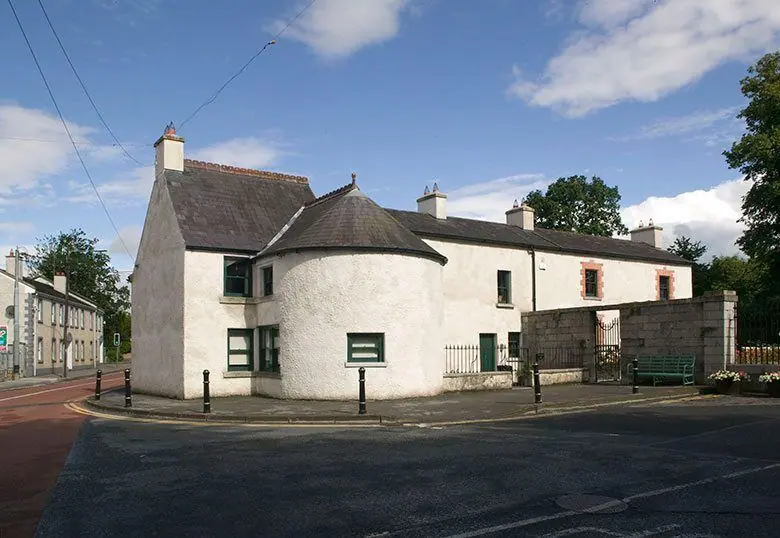
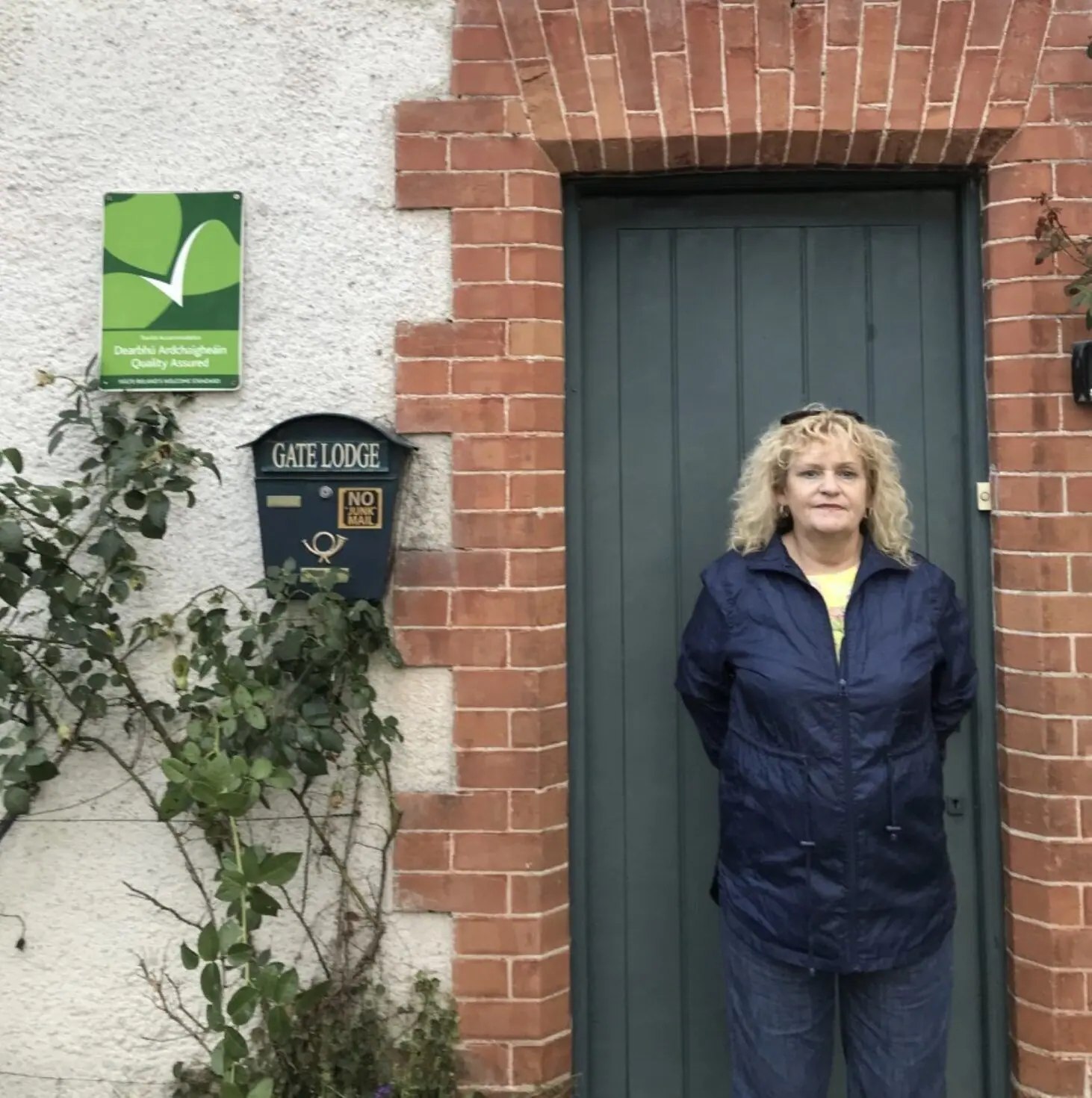
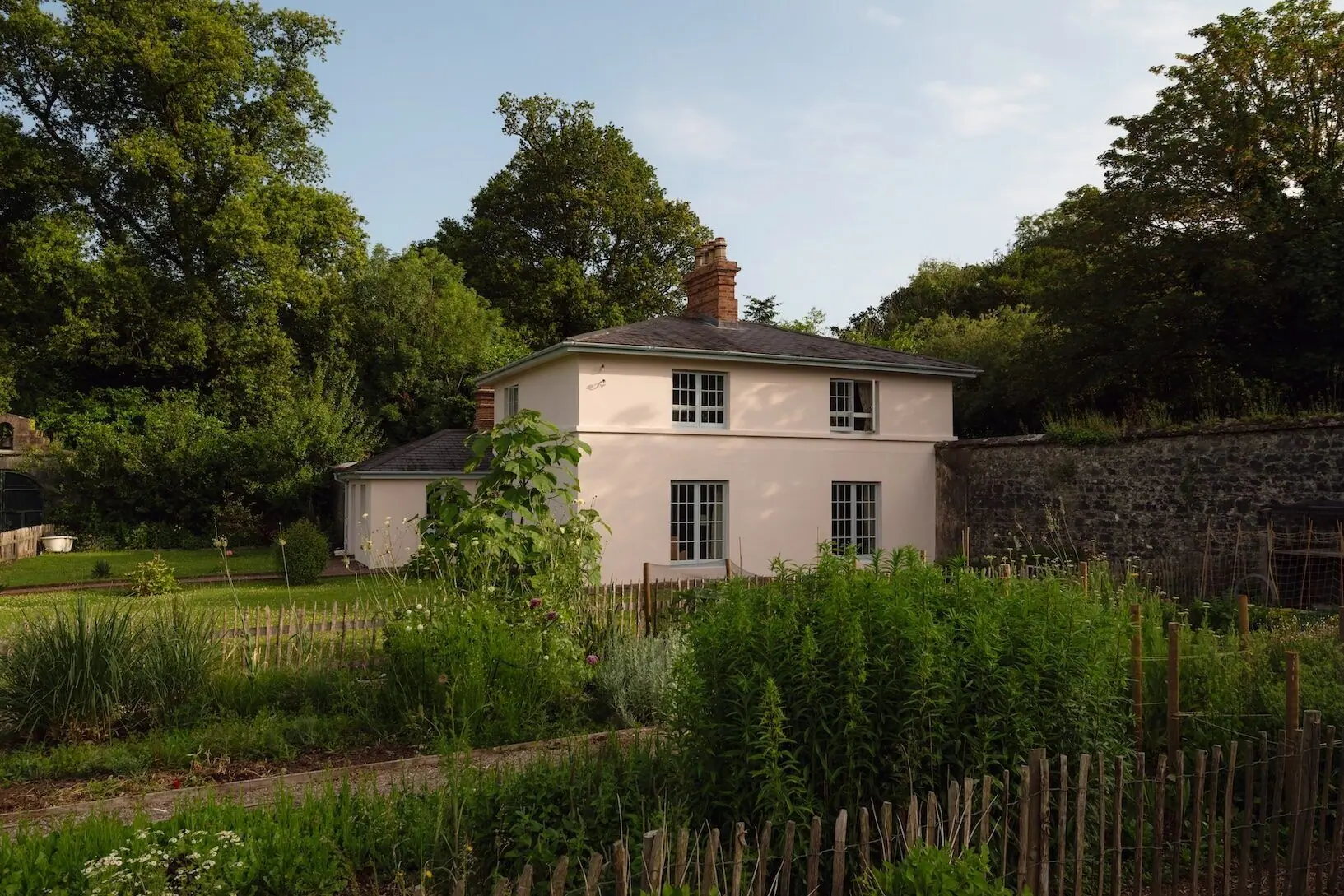
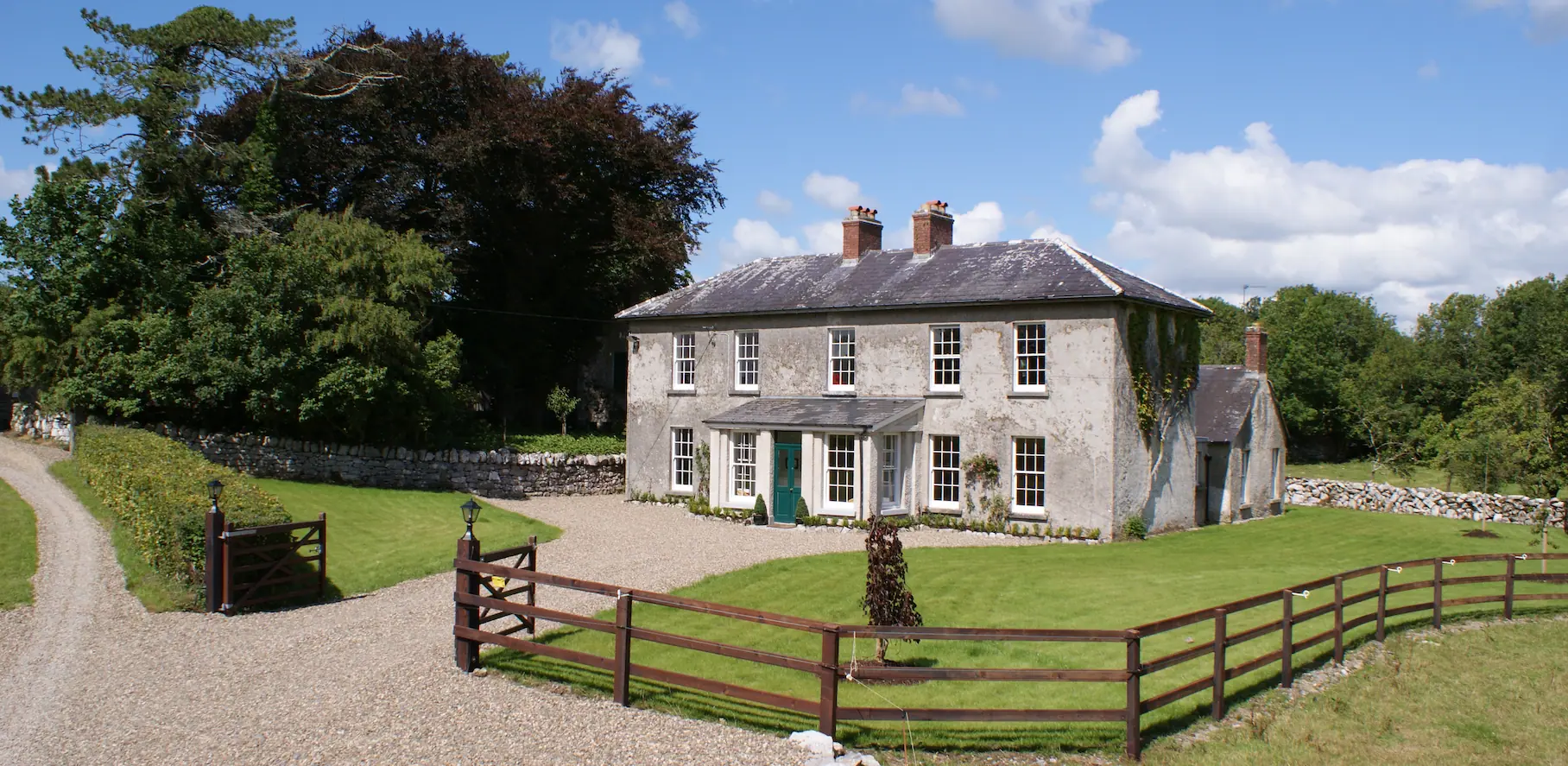
 Three Gate Lodges grace the entrance to the magnificent Palladian Castletown House, one of the most important eighteenth century estates in Ireland. The Lodges are known locally as The Round House, The Pottery and The Gate House. These vernacular buildings form an important part of the Celbridge streetscape and are in fact a very important landmark for both locals and visitors to the area.
The Gate Lodges form a significant and integral part of the Castletown Estate. Unfortunately very little historical information remains for the Gate Lodges. However the importance of Castletown House reflects upon the importance of the Lodges.
The Round House, the lodge on the corner of the Maynooth Road with the bowed entrance was probably the first house to be built on the site.
Originally the Lodge was a single square bay with a small square projecting entrance. Part of the Lodge has a steep roof, heavy roof beams with thick walls and corner fireplaces inside which all suggest an early eighteenth century construction date. The Lodge may even be earlier than Castletown House although there is no building shown on the Noble and Keenan map of 1752. It is likely that both the later two storey additions, one facing the Main Street and the other facing the Maynooth Road were built before the Gate House for which we have a definite construction date of 1783. The small square entrance was also replaced with a bowed projecting entrance bay to the front which adds to the unique character of this building.
Family papers note that the gate piers were completed in 1783 and suggest that the lodge nearest the gate, now called The Gate House, was also complete at this time and occupied by an elderly couple.
Transcripts of the letters from Lady Louisa Conolly to Lady Sarah Lennox reveal the following:-
1783, October 1st, Castletown:
'The piers to Celbridge Gate are finished, and what is extradordinary to say of Paddy workmen in general is, that the Stone Cutters work and iron work are so well finished for the sort of material that they are done in, that it is quite pleasant. The rubbish of the Lodge, (which by the way is a very comfortable one for the old couple that inhabit it) is all cleared away and I am now actually employed in planting and making it pretty all about…'
Not only a Landmark but a home - Memories of the Mercier Family
In the 1950's the Mercier family lived in the Lodges. The Trust was fortunate enough to have the opportunity to meet David Mercier and his sister Gwen who lived in the lodges with their two sisters, Gladys and Valerie and their parents.
They explained that originally the family lived in the first lodge in the early 1950's but then later in the 50's they moved to the second lodge where they had the luxury of an indoor bathroom. In the first lodge they only had an outdoor toilet in the shed at the back of the house.
In the 1950's there were only four cars in Celbridge. As there was so little traffic, the Merciers and the other children used to pour water on the main street, let it freeze and use it as an ice-skating rink.
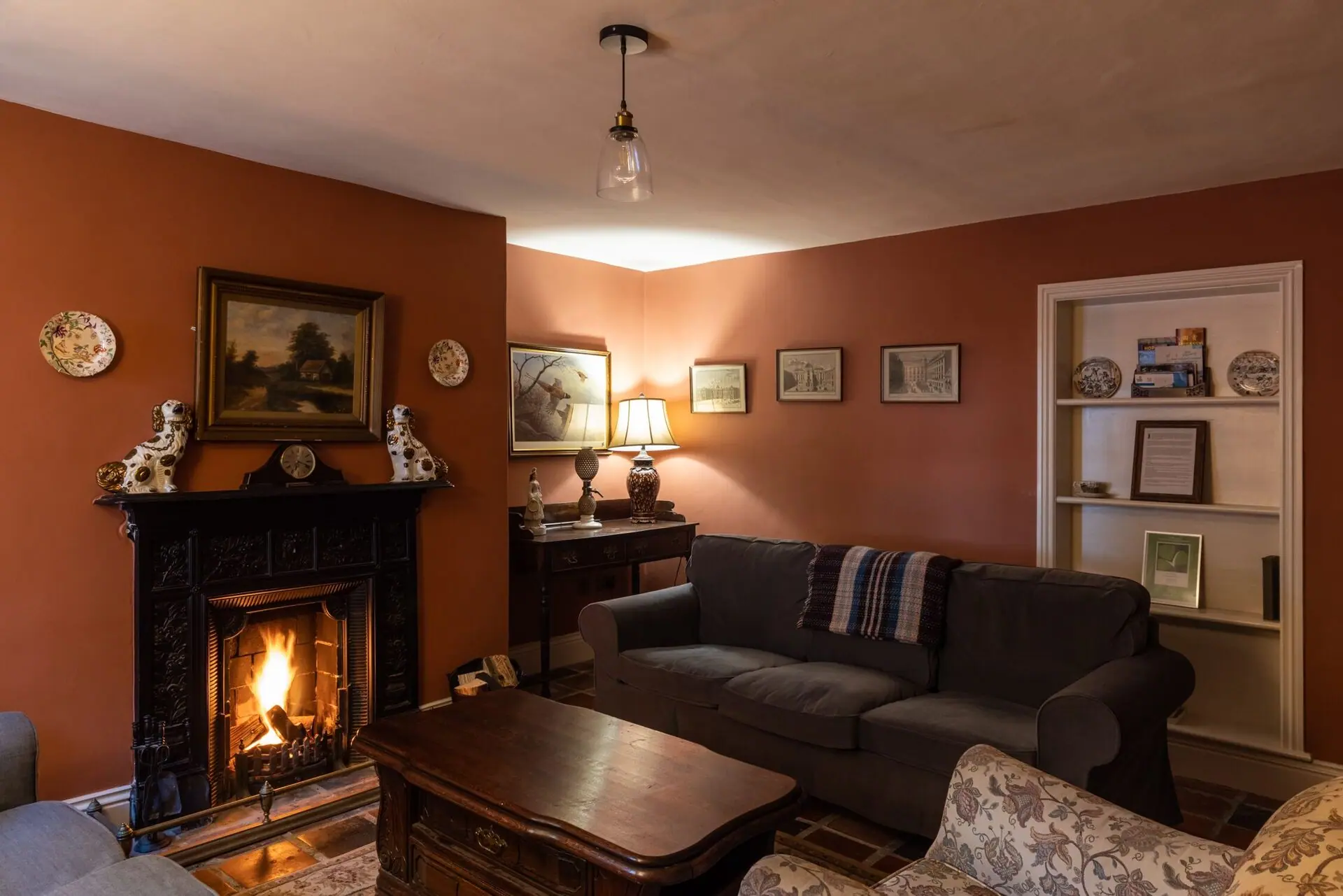
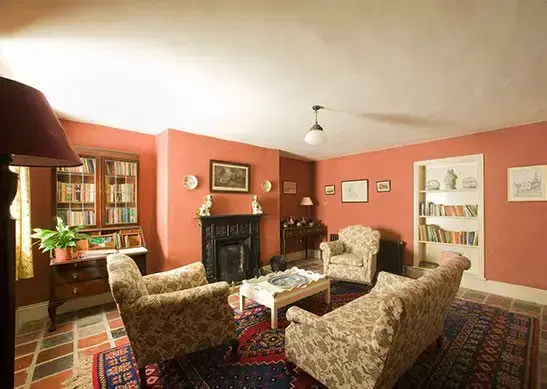
In the late 1950's, the Mercier's moved again, this time to the third gatelodge. The lodges were furnished very simply with lino on the floor which was polished every Saturday using Johnston's wax polish. All the woodwork was painted either brown or cream.
To the right of the lodges there was a wrought iron gate which led to a garden their mother was really proud of. Here she grew vegetables for the family.
The town of Celbridge has a deep historical background. Celbridge Abbey was built by Bartholomew Van Homrigh, Lord Mayer of Dublin, in 1697. It was his daughter, Esther Van Homrigh, who was immortalised as "Vanessa" by Jonathan Swift, who came regularly from his deanery to visit her. The Rock Bridge, situated in the grounds of Celbridge Abbey, is reputed to be the oldest remaining stone bridge that crosses the River Liffey. Celbridge is also the birthplace of Arthur Guinness, founder of the Guinness Brewery family business.