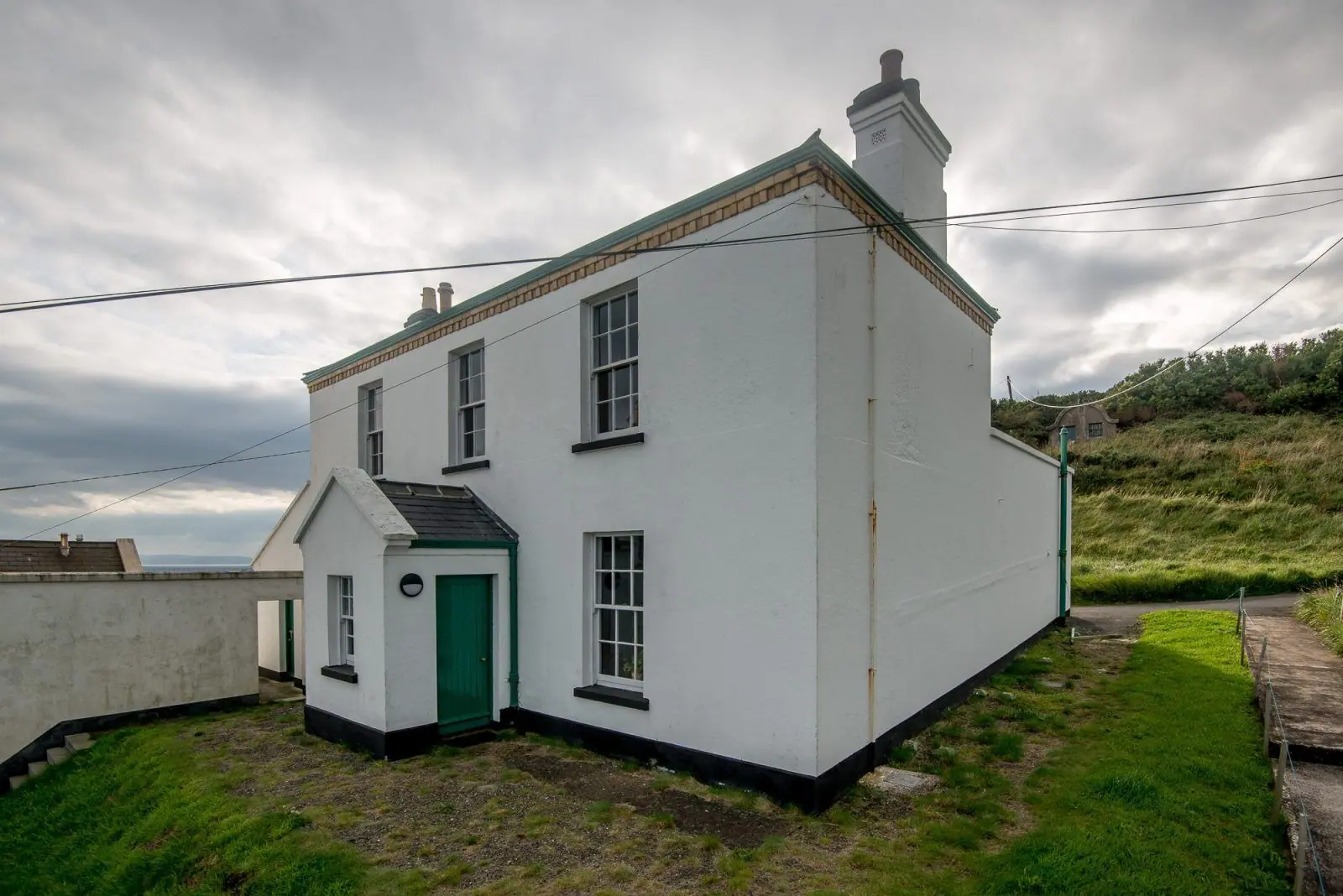
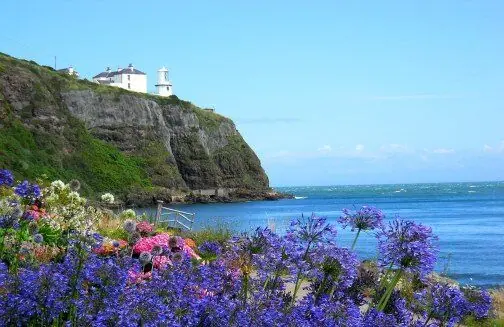
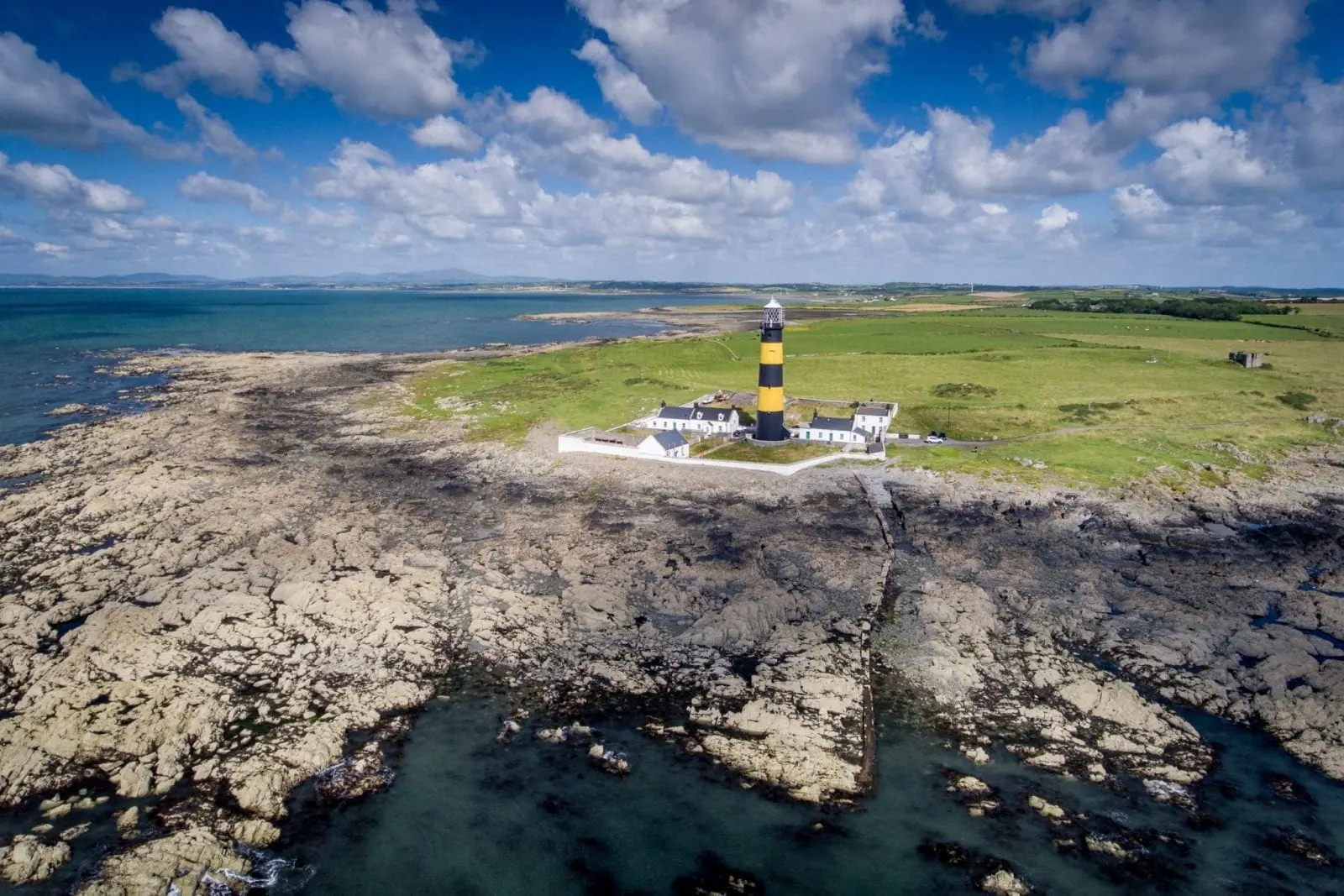
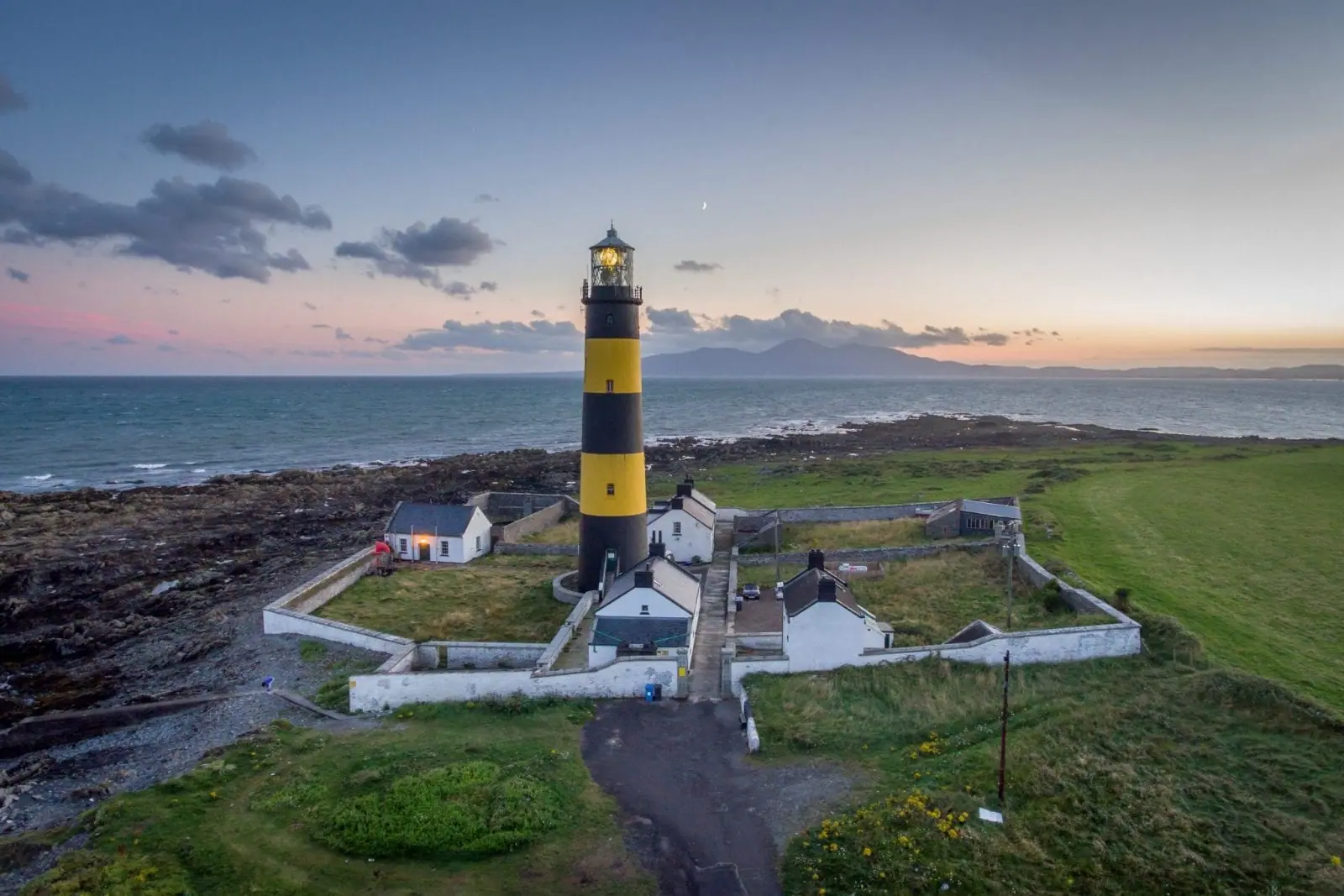
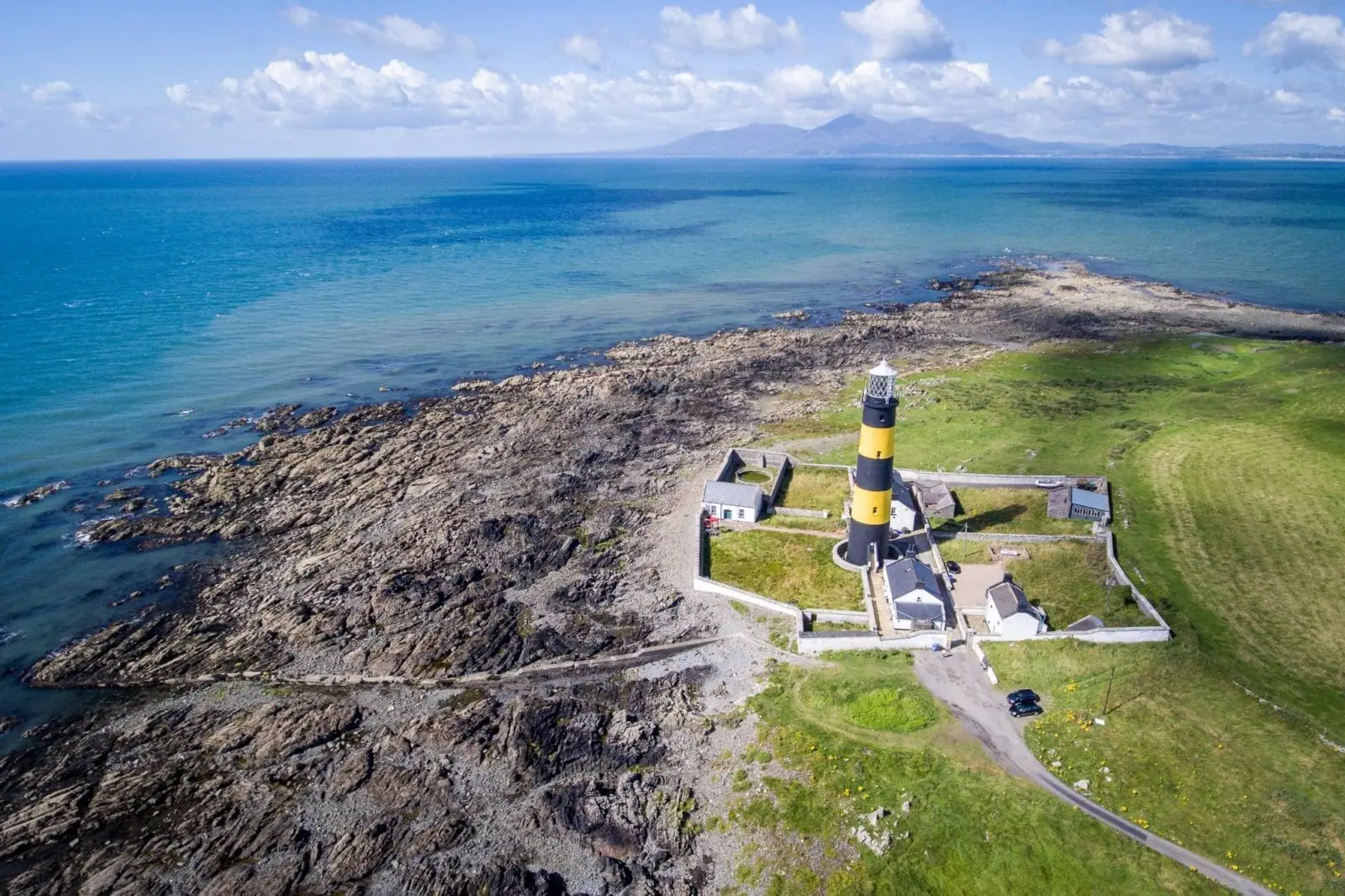
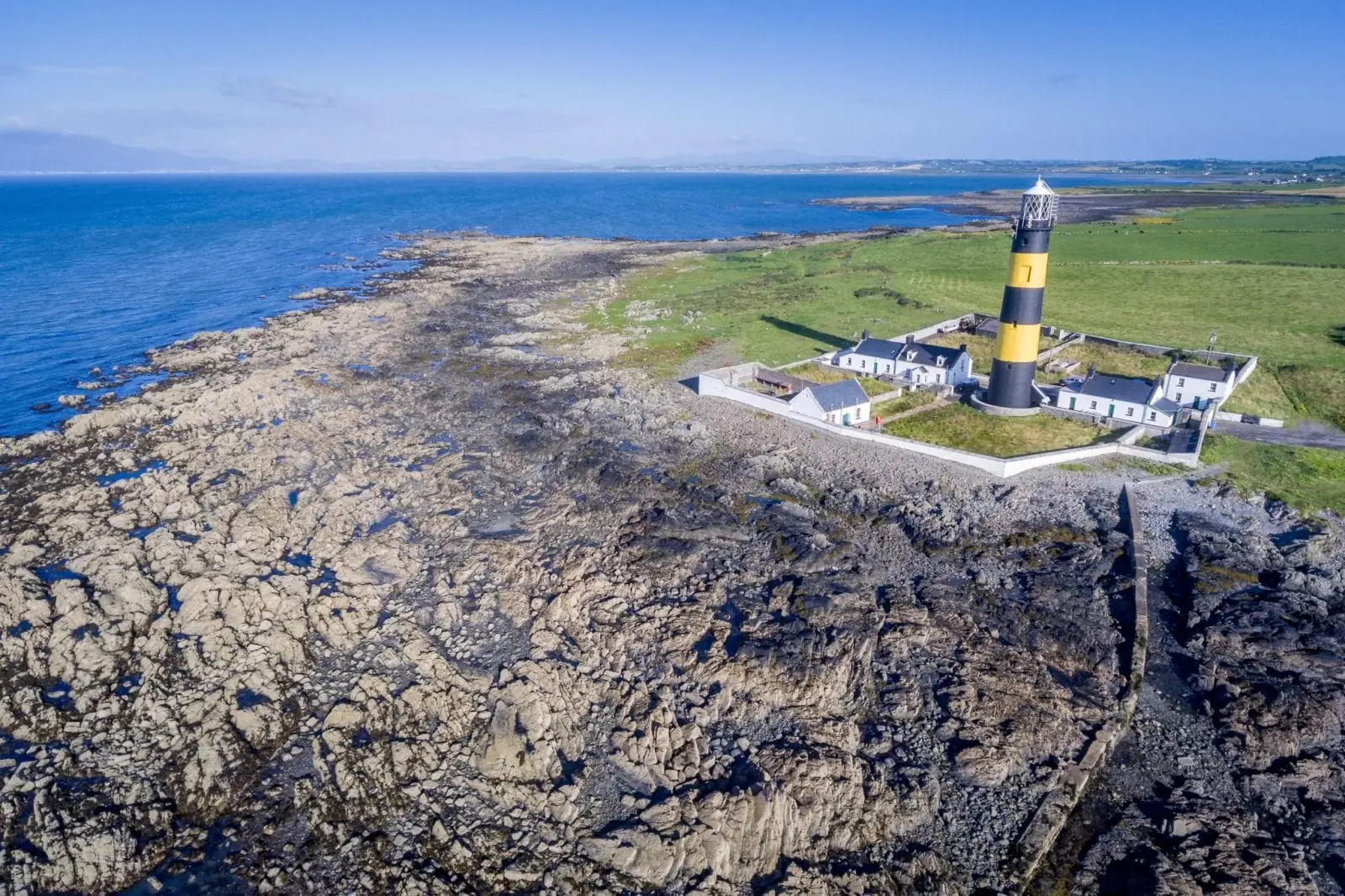
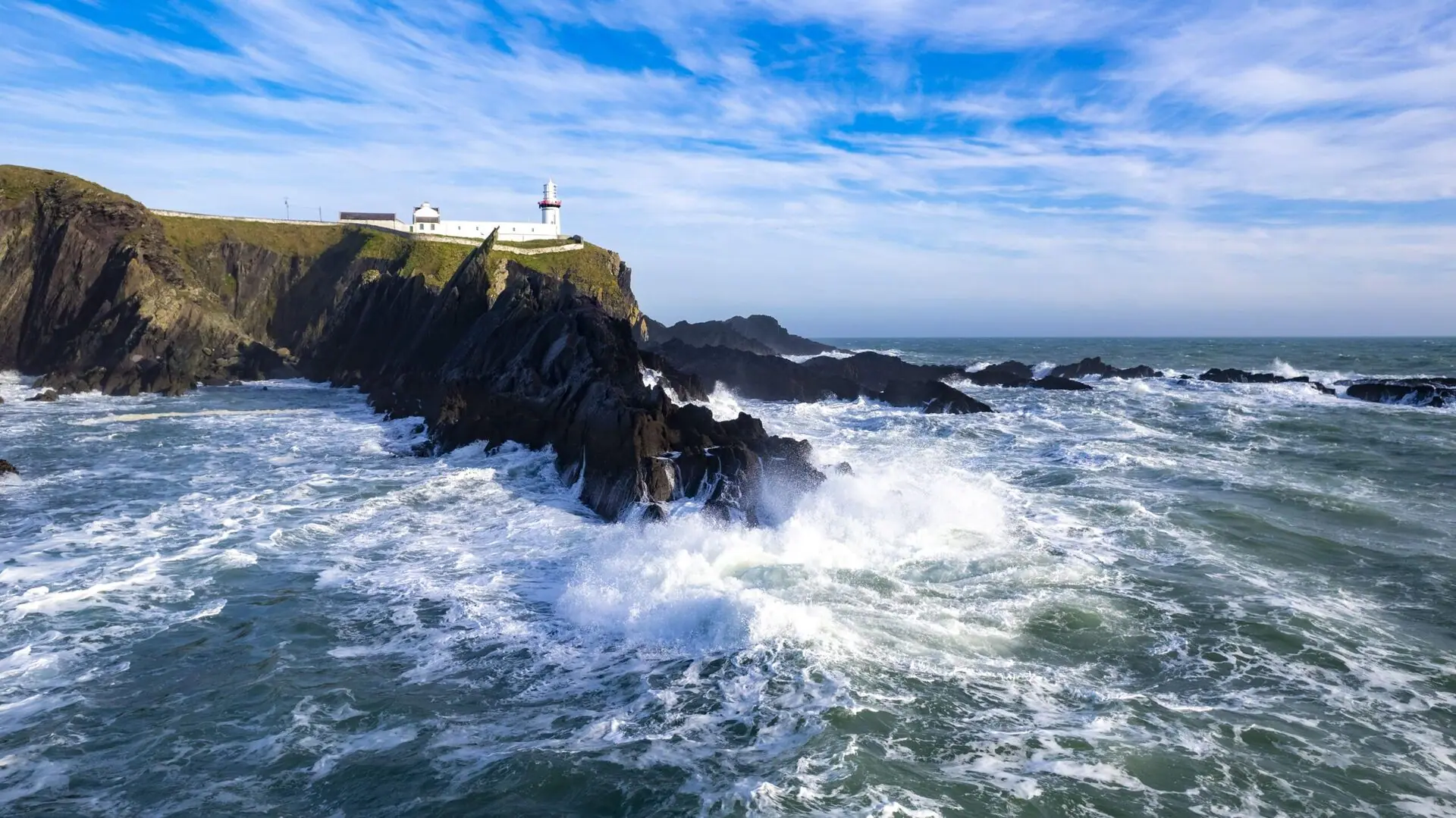
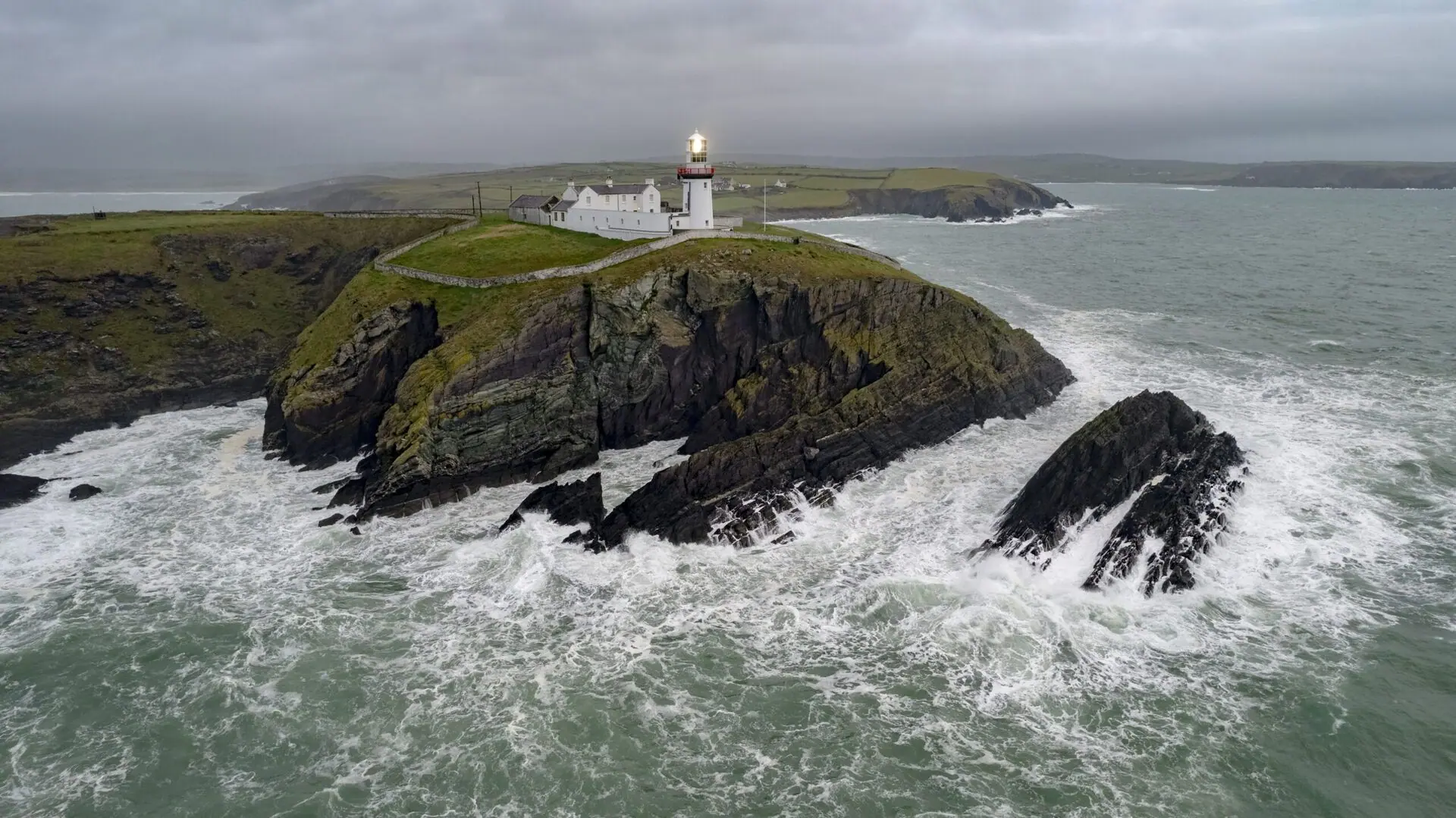
The lighthouse was built on the north shore of the entrance to Belfast Lough in 1901, opposite its twin across the Lough at Mew Island. These two were important in protecting commercial shipping when steam replaced sail in the mid 19th Century, and would have guided all of the great ships of Belfast's shipbuilding glory days, including the ill fated Titanic. Built in the glory days of Belfast's shipping, Blackhead Lighthouse remains as impressive and powerful a navigation aid as ever.
Blackhead Lighthouse was converted to electric operation in 1965. Lightkeepers lived at the station until 1975.
The Story of the Blackhead Light
On the 10 November 1893 the Belfast Harbour Commissioners approached the Northern Lighthouse Board with respect to erecting a lighthouse and fog signal on Blackhead. The Board in their reply a month later stated that they could not recommend the cost of a new light and fog signal coming out of lighthouse funds when the light would only benefit Belfast.
Five years later, in February and March 1898, the Belfast Chamber of Commerce, Lloyds and the Belfast Harbour Commissioners all made representations for a light on Blackhead, but the Board referred them to their reply of 18 December 1893.
On 22 April 1898, Sir W. Watson presented a letter to the Board from Sir Courtenay Boyle of the Board of Trade, about a light and fog signal on Blackhead. The Secretary informed Sir William that he was in communication with the Belfast Harbour Board and that the Inspecting Committee was to report. Trinity House were approached and by June they were in favour of the proposal and required particulars. Towards the end of 1898 the Engineer submitted an estimate of £10,025 which was sanctioned by both Trinity House and Board of Trade early in 1899 - the light to be first order, giving two one-and-a-half second flashes every 30 seconds, the flashes separated by one-and-a-half seconds, and the fog signal to give one report every 5 minutes.
In July 1899 William Campbell and Sons received the contract to construct the buildings and tower.
On 30 March 1900 Trinity House drew attention to the fact that the character of Blackhead was similar to that of Blackhead in Wigtownshire, Scotland, the latter which was also nearing completion. The Board was requested to alter the character of the light and the following June the Inspecting Committee recommended a half a minute flash every three seconds. This was sanctioned by Trinity House and they reported that the Northern Lighthouse Board had changed the name of their Blackhead station to Killantringan. The new light was exhibited and fog signal established on 1 April 1902.
During 1918 the fog signal character was altered to one explosion every two minutes, but after January 1919 it reverted to its previous character - one explosion every five minutes
The Carnegie Library Bookcase
In the early years of the 20th century, before the coming of radio and television, the lighthouse and lightship keepers lived relatively lonely lives, serving, in many cases, six-week periods of duty at a time. Consequently, in coastal towns, the Carnegie Libraries granted a special concession to the light keepers by providing each station with a well made oak bookcase which was replenished with a change of books on a regular basis. The public library services of the various county councils eventually took over the function of the Carnegie Libraries but the regular supply of books to the light keepers continued well into the second half of the 20th century. Now that all the lighthouses are automated and no longer manned, the fine oak bookcases that remain in the keepers’ dwellings continue to bear silent witness to the great generosity of Andrew Carnegie, philanthropist extraordinaire.